Vineyard maintenance : Mechanical weed control
As we focus our efforts on reducing the environmental footprint of our winemaking operations, we believe it is essential to prioritize soil health. The soil functions as a living system and plays a vital role in both the productivity of our vineyards and the quality of the environment.
Therefore, like many other winemakers, and in line with our environmental commitment, we believe it is essential for vineyard maintenance to replace chemical weed control with more environmentally friendly alternatives.
The importance of weeding control in vineyards
The primary goal of weed control in vineyards is to limit competition between weeds and grapevines for soil resources, particularly water and nitrogen.
To achieve this, chemical herbicides have long been used extensively. Today, however, they are coming under scrutiny, largely due to their negative impact on water quality.
However, controlling weed growth between and under the rows remains important. It helps maintain good vineyard health by limiting vegetation between the vines.
Indeed, while weed growth is important for limiting leaching and promoting biodiversity, care must be taken to ensure it does not become invasive, especially in the immediate vicinity of the vines. In addition to the risk of competition for water and nitrogen, too many weeds under the rows could also lead to increased humidity, which would promote diseases, pests, and the risk of bud freeze in the spring.
To best manage the vegetation on our plots, we now prioritize alternative techniques to chemical weed control.
Our goal is zero herbicide use. We hope to achieve this in the coming years by drastically reducing the use of herbicides in our vineyards.
Vineyard maintenance : Aiming for zero herbicide
Moving away from the use of herbicides requires significant changes within a vineyard operation, both in terms of organization and equipment. Indeed, numerous factors must be taken into account to ensure that vineyard maintenance is effective and does not hinder the healthy development of the vines.
Thus, soil moisture—both at the surface and at depth—and root depth are two factors we must absolutely take into account when determining the timing of our passes. Soil type, meanwhile, will influence the choice of equipment used.
We have invested in subsoilers, which we used for the first time on some of our plots at the end of April.
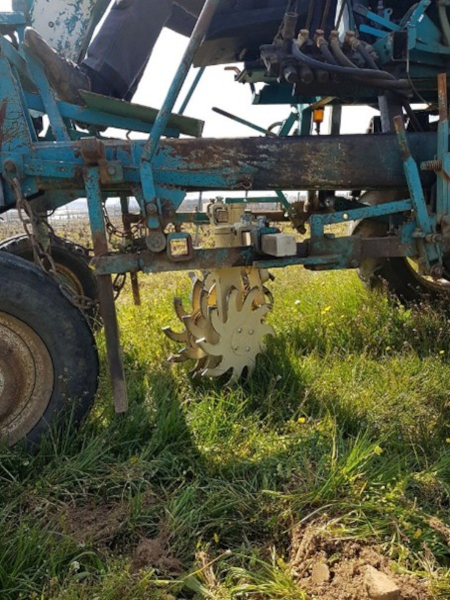
The disc harrows mounted on our straddle tractor
Vineyard maintenance using a disc harrow appears to be an excellent alternative to the use of herbicides. The discs lift the soil and turn it over along the vines to cover the grass growing there. This tool promotes soil health by improving its structure and aeration. It helps restore soil fertility and encourages deep rooting of the vines.
On the second pass, toward the end of May, we will also use Kress tines to pull up the grass growing between the rows and spread the soil around the vines.
During the second pass, toward the end of May, we will also use Kress tines to pull up the weeds growing between the rows and spread the soil around the vines.
These tools, which we mount simultaneously on our straddle-type tractor, allow for quick and effective weeding of the plots. We will make additional passes during the summer if necessary.
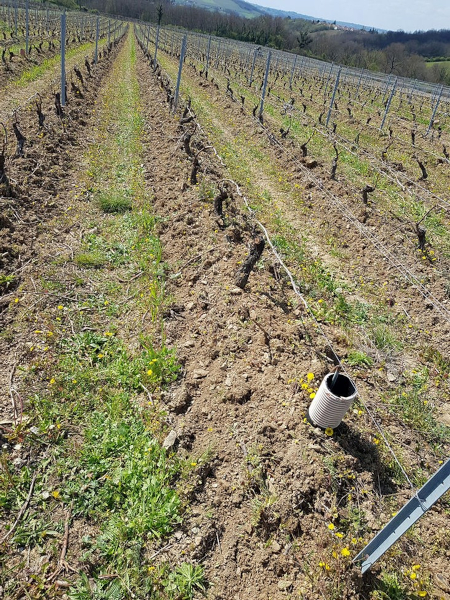
The plot after the first pass of the disc harrows. The soil has been turned over beneath the row, and the weeds are buried.
Is the grass growing between the rows of vines a good thing or a bad thing ?
The absence of weeds between the rows has long been considered—and still is, in many cases—an essential requirement for a clean, well-maintained vineyard.
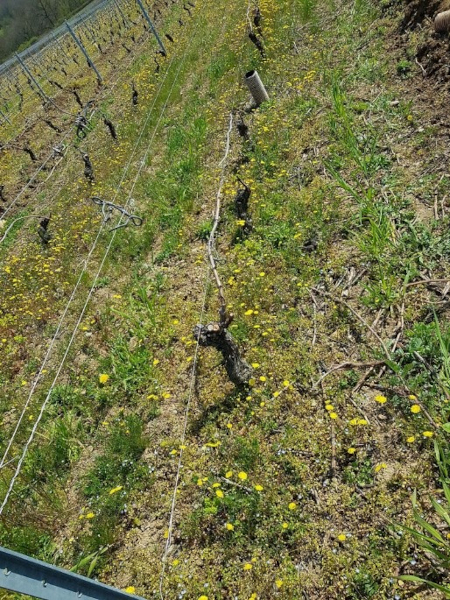
However, the transition to zero herbicide use requires a more tolerant approach and, above all, an understanding that the grass remaining between the rows can be beneficial to the vineyard in many ways:
– Improved biological soil function;
– Increased soil resistance to erosion;
– Reduced nitrate leaching;
– Reduced soil compaction from tractor traffic…
Mechanical weeding thus offers this advantage over chemical weeding: it can eliminate weeds located right at the base of the vines—which are potentially harmful—while maintaining beneficial vegetation between the rows.